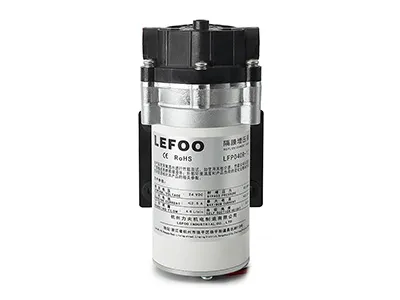
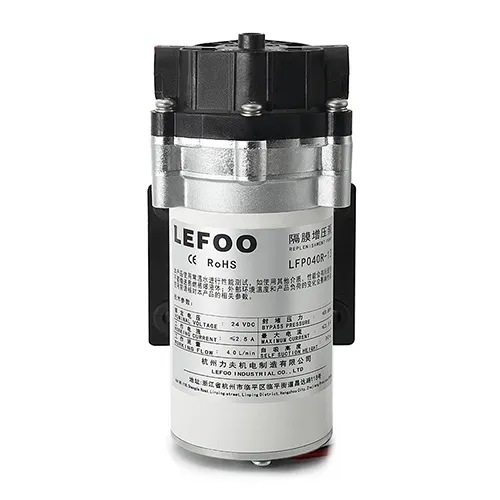
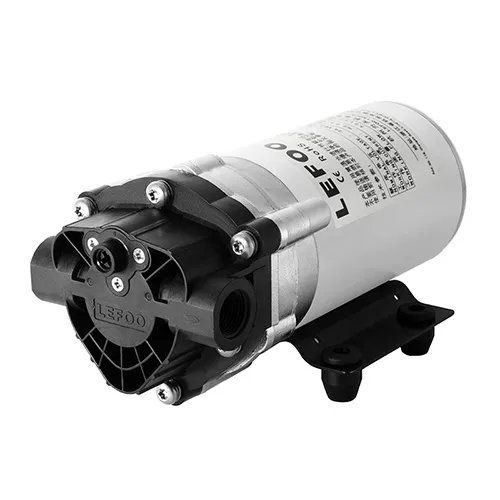
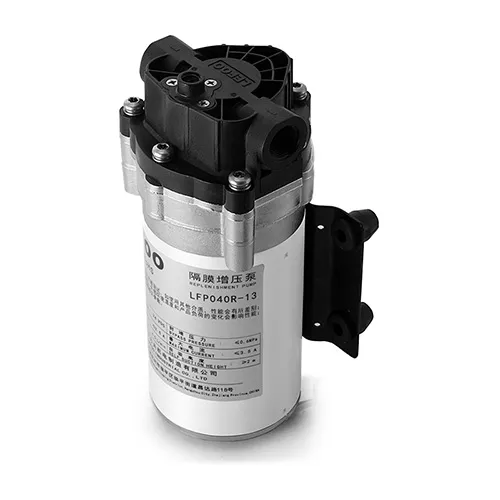
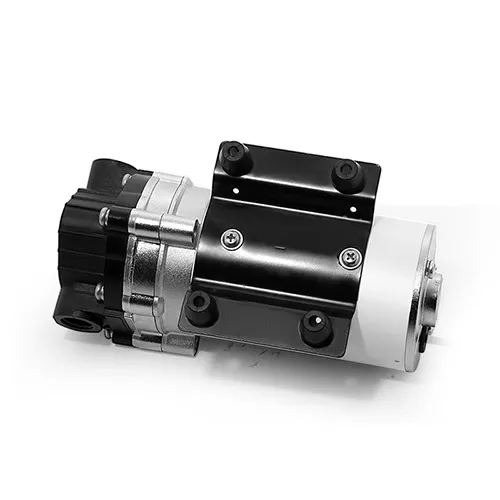
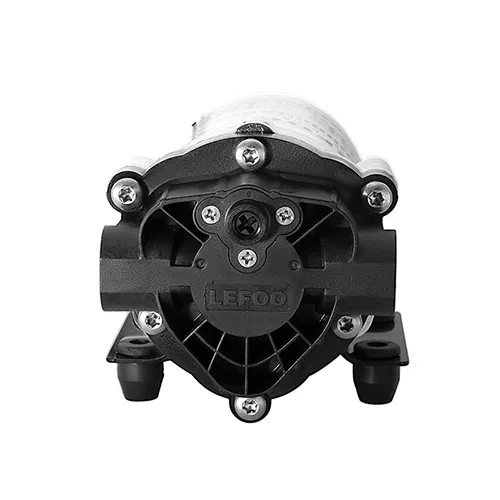
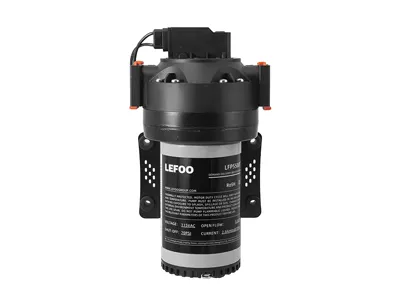
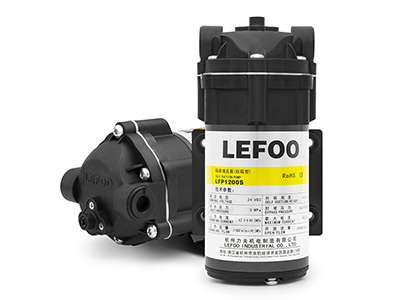
1. What is the LEFOO Ethylene Glycol Liquid Replenishment Pump?
This pump is a specialized diaphragm pump designed for coolant filling, replenishment, and transfer in closed‑loop liquid cooling systems. It is part of LEFOO’s diaphragm pump family but is specifically engineered for ethylene glycol/water mixtures, making it ideal for data centers,cooling systems, heat exchange units, and other applications where antifreeze solutions are used.
2. What media can this pump handle?
The pump is designed for ethylene glycol + pure water mixtures. It is recommended that the ethylene glycol ratio be kept below 50% for optimal performance and longevity.
3. What are the available flow rate options?
The pump is available in four models with different working flow rates (at 25°C, inlet pressure 0 MPa, outlet open):
LFP030R‑13: 3000 ml/min (3 L/min)
LFP040R‑13: 4000 ml/min (4 L/min)
LFP050R‑13: 5000 ml/min (5 L/min)
LFP060R‑13: 6000 ml/min (6 L/min)
4. What is the bypass pressure?
The bypass pressure (measured with inlet at 0 MPa and outlet completely closed) is ≤0.6 MPa for all models.
5. What are the operating temperature limits?
The pump can handle media temperatures from ‑40°C to +55°C and operates in ambient temperatures ranging from ‑40°C to +55°C.
6. How does the pump perform at low temperatures?
At ‑40°C (tested with 50% ethylene glycol as the medium), the current draw increases. Refer to the specification table for detailed low‑temperature current values. The pump has been validated with start‑stop and continuous run tests at this low temperature.
7. What are the electrical strength and safety ratings?
The power terminal and housing can withstand 500V/50Hz for 1 minute without arcing or breakdown. The pump has an IPX5 ingress protection rating, suitable for environments with liquid splashing risks.
8. What is the expected service life?
At 25°C: 100,000 start‑stop cycles or 1,000 hours of continuous operation.
At ‑40°C: 10,000 start‑stop cycles or 500 hours of continuous operation.
After completing either test, there shall be no leakage or jamming, and performance degradation (flow rate, noise, etc.) shall be ≤15%.
9. Is there a recommended storage period?
The recommended storage period is within 6 months. It is advisable to use the pump promptly after purchase to avoid potential performance degradation caused by prolonged storage.
10. Can the pump run dry?
The specifications do not explicitly address dry running. It is recommended to ensure the pump is primed with liquid before operation to avoid potential damage, as the pump is intended for liquid transfer applications.
11. Can this pump be customized?
For customization inquiries (e.g., voltage, flow adjustments, connector types, or special media compatibility), please contact LEFOO’s technical team to discuss your project requirements.
12. What is the bypass current, and why is it measured?
Bypass current is the current draw when the outlet is completely closed (dead‑head condition). This measurement helps system designers understand the pump’s electrical load under maximum pressure conditions, which is important for power supply sizing and system protection design.
 English
  français
  Deutsch
  Español
  italiano
  русский
  português
  العربية
  Türkçe
  Zulu
Zulu