English
 français
 Deutsch
 Español
 italiano
 русский
 português
 العربية
 Türkçe
 Zulu

A liquid cooling system needs a way to add coolant during commissioning, refill after maintenance and restore the required fluid level when necessary. These tasks depend on how much coolant must be transferred, how quickly it must be delivered and the pressure at the filling connection.
A coolant replenishment pump supplies fluid to the cooling system. Its selection starts with the filling or top-up requirement. The heat load and temperature difference used to size a cooling circulation pump do not directly determine the required replenishment flow.
This guide explains how to select a pump for coolant filling and replenishment, with particular attention to glycol mixtures, delivery pressure and installation conditions.
1. Define the Filling Volume and Required Replenishment Time
Separate the tasks the pump will perform: initial filling, top-up during operation, and refilling after service. Each may require a different volume, delivery time and operating cycle.
For an initial estimate:
Required average delivery flow = Coolant volume to transfer ÷ Available filling time
For example, transferring 20 litres in 10 minutes requires an average delivery flow of 2 L/min. This is an illustrative transfer requirement, not a pump rating. Allow for the actual pressure, fluid properties, venting procedure and any pauses required during filling.
For automatic top-up, define the permitted liquid-level range and the volume delivered during each cycle. Avoid using frequent replenishment to conceal unexplained coolant loss; repeated top-up should trigger inspection of the system.
| Operating Task | Information Needed |
|---|---|
| Initial filling | Fill volume, target time and approved air-removal procedure |
| Routine top-up | Level limits, volume per cycle and expected frequency |
| Maintenance refill | Service volume and filling access |
| Automated replenishment | Start/stop signals, alarms and maximum permitted run time |
2. Match Delivery Flow to the Pressure at the Filling Point
A pump must overcome the pressure at the injection point and the losses in the replenishment line. Depending on the installation, these may include tank pressure, elevation difference, tubing resistance, filters, valves and quick connectors.
Confirm whether filling takes place with the cooling system depressurized or while it is operating. This changes the required pump operating point.
When comparing diaphragm booster pumps, ask for delivery-flow data at your required pressure and coolant conditions. An open-outlet flow rating does not show how much fluid the pump will deliver into a pressurized system.
Also distinguish bypass pressure from working pressure. A bypass or closed-outlet specification does not establish the flow available during normal filling. Set pressure limits and protective controls according to the pump and receiving equipment specifications.
3. Check Coolant Compatibility and Temperature Conditions
Specify the exact coolant before selecting the pump. “Glycol coolant” is incomplete information: ethylene glycol and propylene glycol mixtures can differ, and concentration, additives and temperature affect compatibility and pumping performance.
Provide the supplier with:
Coolant brand, formulation and safety or technical datasheet.
Glycol type and concentration.
Minimum startup temperature and normal operating temperature.
Requirements for wetted materials and fluid cleanliness.
Any restrictions on contamination or mixing with other fluids.
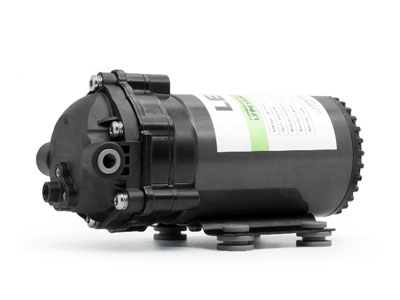
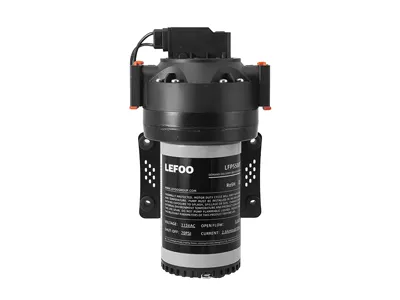
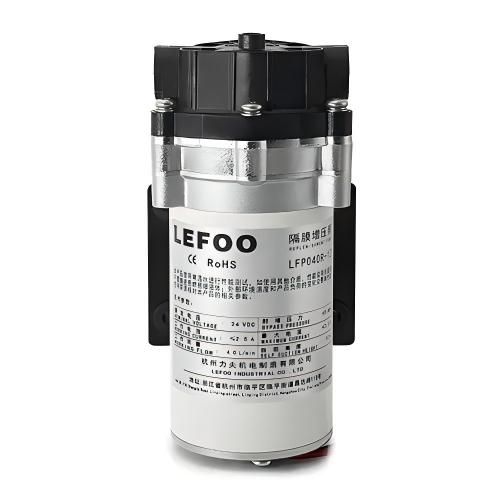
LEFOO’s coolant replenishment pump is presented as a diaphragm pump for coolant filling, replenishment and transfer in liquid cooling systems, including ethylene glycol/water applications. Confirm the exact formulation and concentration with LEFOO before selection.
Cold-start conditions deserve separate review. Higher fluid viscosity can change delivery performance and electrical demand, so room-temperature test results should not be treated as proof of performance at the lowest operating temperature.
4. Verify Self-Priming, Installation and Electrical Requirements
The supply container may sit below the pump or change level during operation. Review the lowest expected liquid level, suction-line length, fittings and fluid temperature when assessing self-priming performance.
Self-priming capability does not establish permission for dry running. Confirm the priming procedure and permitted operating conditions for the selected model.
| Selection Factor | What to Verify |
|---|---|
| Suction arrangement | Lowest liquid level, suction lift, tubing size and air-tight connections |
| Discharge arrangement | Injection pressure, connection type and backflow prevention where required |
| Power supply | Rated voltage, startup demand and current at the lowest operating temperature |
| Installation | Mounting orientation, ventilation, vibration control and service access |
| Duty cycle | Filling duration, starts per hour and rest periods if specified |
LEFOO lists 24V DC models with published flow options of 3–6 L/min. The product FAQ identifies these flow values as measured at 25°C with zero inlet pressure and an open outlet. Actual delivery must therefore be checked against the intended pressure and coolant conditions.
5. Define Controls and Validate the Complete Replenishment Process
For an automated installation, decide what starts the pump, what stops it and what happens if filling does not restore the expected level. The required controls may belong to the external system rather than the pump itself.
Depending on the equipment design, checks may include low supply-tank level, a high-level stop, abnormal pressure, excessive run time and unexpected replenishment frequency. Confirm which functions are included and which must be provided separately.
Test the complete assembly with the specified coolant and representative conditions. Record delivered volume, filling time, pressure, voltage and current. Check priming, leaks, air removal, stopping behavior and possible backflow after shutdown.
For procurement, prepare a short application brief containing the coolant specification, transfer volume, target filling time, injection pressure, suction arrangement, power supply and control requirements. These details give the supplier a practical basis for model selection.
FAQs About Coolant Replenishment Pumps
What is the difference between a coolant replenishment pump and a circulation pump?
A replenishment pump adds fluid to a system during filling or top-up. A circulation pump moves coolant through the cooling circuit to transport heat. Their operating requirements should be assessed separately.
How do I calculate the required replenishment flow?
Divide the volume to be transferred by the available filling time. Then check that the selected pump can deliver that flow at the actual pressure, temperature and coolant concentration.
Can I select the pump from its maximum flow rating?
No. Confirm delivery at the required working pressure. Open-outlet flow alone does not establish suitability for filling a pressurized cooling system.
Can a coolant replenishment pump handle any glycol mixture?
Compatibility must be confirmed for the glycol type, concentration, additives, temperature and wetted materials. A general glycol application description does not cover every formulation.
Does a self-priming pump allow dry running?
Not necessarily. Self-priming and dry-running capability are separate specifications. Follow the selected model’s priming and operating instructions.
Discuss Your Coolant Replenishment Requirements with LEFOO
Selecting a pump for a liquid cooling project? Send LEFOO your coolant datasheet, filling volume, target delivery time, injection pressure and available power supply. Include the suction arrangement and control requirements so the team can assess a suitable configuration.
Email lefoogroup@lefoo.com to discuss your coolant filling and replenishment application.