A delivery pump and a booster pump can both move water and increase pressure, which is why the two are sometimes confused during equipment selection. Their roles in a fluid system, however, are not always the same.
A delivery pump is commonly used when water needs to be drawn from a tank or another low-pressure source and delivered to a point of use as demand occurs. A booster pump is typically selected when water is already available to the system, but the existing pressure is not sufficient for the downstream equipment.
The difference becomes especially important in water treatment, dispensing, and OEM equipment. Choosing the wrong pump type may result in unnecessary system complexity or a pump that does not operate as intended. The simplest way to distinguish them is to start with the water source and ask what the system actually needs the pump to do.
What Is a Delivery Pump and How Does It Work?
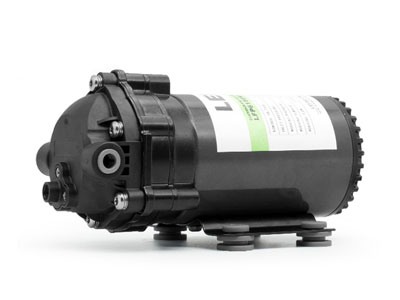
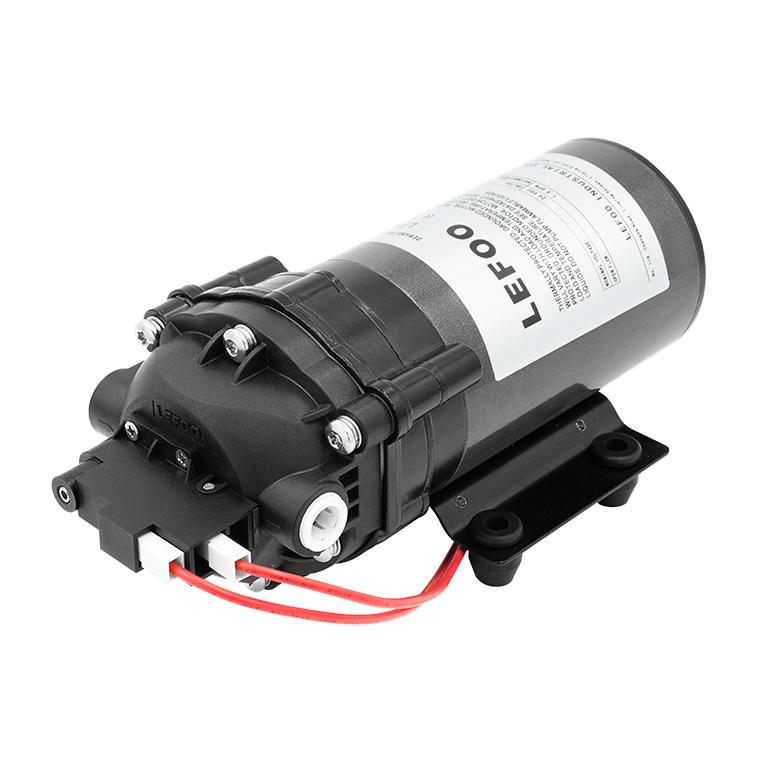
A delivery pump is a diaphragm pump designed to supply liquid when the downstream system requires it.
Inside the pump, the movement of the diaphragm changes the volume of the working chamber. This creates suction on the inlet side and pushes liquid toward the outlet. In a typical demand system, a pressure switch allows the pump to respond automatically as pressure changes.
When a downstream valve or outlet opens, system pressure drops and the pump starts supplying water. Once demand stops and the preset shut-off pressure is reached, the pump stops. This makes the delivery pump useful in systems where water is consumed intermittently rather than flowing continuously.
LEFOO's delivery pump range is designed for applications such as drawing water from atmospheric tanks, delivering purified water to a point of use, and providing pressure when required.
This combination of self-supply and pressure-controlled operation is one reason a delivery pump is commonly considered for standalone water systems and equipment that cannot rely on a continuously pressurized inlet.
What Is a Booster Pump and What Is It Used For?
A booster pump is primarily used when the system already has a water supply but needs additional pressure or flow to operate properly.
Reverse osmosis systems are a clear example. An RO membrane requires adequate feed pressure to operate effectively. If the incoming water pressure is insufficient, a booster pump can raise the inlet pressure and support the required water flow through the system.
LEFOO's diaphragm booster pump range is strongly oriented toward RO and water purification applications. Its RO booster pumps are designed to increase inlet pressure and improve water flow through water purification equipment.
This means the booster pump is generally working with an existing supply rather than creating an on-demand water supply from an unpressurized storage tank.
There can still be overlap. Both pump types use diaphragm pumping technology in many LEFOO configurations, and both can contribute to pressure generation. The distinction is therefore better understood from the pump's function within the complete system, rather than from pressure capability alone.
Delivery Pump vs. Booster Pump: What Are the Key Differences?
The clearest difference is what problem each pump is expected to solve.
A delivery pump is well suited to a system that needs water delivered automatically whenever an outlet is opened. A booster pump is more commonly used when an existing supply needs additional pressure for downstream treatment or equipment.
The comparison below provides a practical starting point:
| Selection Factor | Delivery Pump | Booster Pump |
|---|
| Primary role | Supply water when demand occurs | Increase existing water pressure |
| Typical water source | Tank or other low-pressure source | Existing pressurized water supply |
| Operation | Often responds to downstream demand | Supports required system pressure |
| Common system use | Point-of-use water delivery | RO and water purification |
| Key selection question | How should water be supplied to the outlet? | Is the existing inlet pressure sufficient? |
The table should not be treated as an absolute rule because pump configurations and system designs vary. Instead, it helps identify the first question engineers should ask.
If the equipment needs to pull water from storage and supply it automatically when required, a delivery pump is usually the more relevant category. If the equipment already receives water but cannot achieve the pressure required by the next stage, a booster pump may be the more appropriate starting point.
When Should You Choose a Delivery Pump?
A delivery pump makes sense when the equipment needs its own controlled water supply.
Consider a system with an atmospheric storage tank. There may be little or no inlet pressure available to push water toward the dispensing point. The pump therefore needs to draw water from the source, deliver it through the system, and respond as the user starts or stops water consumption.
This type of operating pattern can appear in mobile water systems, dispensing equipment, purification equipment, and other applications where water is consumed intermittently.
LEFOO's delivery pump range includes DC and AC configurations as well as high-flow models, giving equipment designers different starting points according to their power supply and required water delivery capacity.
A delivery pump is particularly worth considering when:
the source provides little or no useful inlet pressure;
water needs to be supplied only when an outlet demands it;
automatic start and stop operation is required.
Rather than treating each condition separately, think of the complete operating sequence: Where does the water come from, what happens when the outlet opens, and how should the pump respond when the outlet closes?
If the answer describes an on-demand supply system, a delivery pump is likely to fit the system architecture more naturally.
When Is a Booster Pump the Better Choice?
A booster pump becomes the better choice when water is already reaching the equipment but does not have enough pressure for the process that follows.
This is common in reverse osmosis water purification. The pump is not primarily there to create a standalone supply from a storage tank. Its job is to raise feed pressure so that the RO system can operate under the required conditions.
LEFOO offers diaphragm booster pumps across different voltage and capacity configurations for RO and water purification systems.
For this reason, asking whether the equipment "needs more pressure" is not quite enough. A delivery pump can also create pressure.
The more useful question is: Does the system need a pump to establish an on-demand water supply, or does it already have a supply that simply needs to be boosted? That distinction prevents buyers from selecting pumps based only on pressure specifications.
For OEM projects involving water purification, dispensing, or other fluid-control equipment, you can review the wider LEFOO product range to explore our product catalog to compare delivery, booster, and other pump solutions.
How to Choose Between a Delivery Pump and a Booster Pump
Start with the water source.
If the equipment takes water from an atmospheric tank or another source without sufficient pressure, determine whether the pump needs to create the water supply and respond automatically to downstream demand. In this situation, a delivery pump may be appropriate. If usable inlet pressure already exists, identify whether the downstream process requires additional pressure. For applications such as RO purification, this points more directly toward a booster pump.
After establishing the pump's role, evaluate the actual operating requirements. Required flow and pressure matter, but so do the power supply, inlet conditions, and how the equipment controls water use. A practical selection sequence is:
water source ➔ existing inlet pressure ➔ required system function ➔ flow and pressure ➔ control requirements ➔ pump selection
This is more reliable than beginning with a pump specification and trying to make the system fit around it.
For OEM equipment, it is also useful to discuss the complete working conditions with the pump manufacturer. The same headline pressure or flow requirement can lead to different pump choices depending on where the water comes from and what happens downstream.
Conclusion
Delivery pumps and booster pumps can both move and pressurize water, but they serve different system needs. A delivery pump is generally suited to supplying water as it is required, while a booster pump is better suited to increasing pressure in an existing supply.
If you are unsure which configuration fits your equipment, contact our team with your water source, required flow, and pressure information for pump selection support.
FAQs About Delivery Pumps and Booster Pumps
Is a delivery pump the same as a booster pump?
No. Their functions can overlap, but a delivery pump is generally used to provide water as demand occurs, while a booster pump mainly raises pressure in an existing water supply.
Can a delivery pump increase water pressure?
Yes. Delivery pumps can pressurize water while supplying it. The key difference is how the pump is used and controlled within the system.
Do I need a booster pump for an RO system?
A booster pump may be required when the incoming water pressure is not sufficient for the RO system's operating requirements.
Which pump should I use with an atmospheric water tank?
A self-priming delivery pump is often the more suitable starting point when water needs to be drawn from an unpressurized tank and supplied automatically to a point of use.
 English
  français
  Deutsch
  Español
  italiano
  русский
  português
  العربية
  Türkçe
  Zulu
Zulu